According to Sandvine (Schwartz, 2023), the video format is responsible for 65% of global data traffic on the Internet. For the first time, Netflix has overtaken YouTube as the single app with the highest traffic, while TikTok, Disney+ and Hulu are among the top ten apps generating the largest volume of traffic.
According to Sanvine CEO Samir Marwaha, “Video is almost at a point where it can no longer be considered as a standalone category, as it is now integral to conferencing, gaming, social networking, messaging and virtually every app that wants to drive interactions and engagement.” Furthermore, with the expansion of the 5G network, the fifth generation of mobile networks, with speeds 10 times faster than the market’s leading fibre-optic offers, video traffic and video production will account for almost 80% of mobile traffic by 2027 (Ericsson, 2023).
Therefore, video is a dominant format, both for those who consume content and for those who produce it. As a result, it makes sense to consider oneself competent in the field of video production and creation in a world where technology is ubiquitous and increasingly user-friendly.
Broadly speaking, there are two types of video editing, based on the type of support used:
- Linear or analogue editing. In the case of tape, editing was done mainly with tape recorders – normally a player where the tape with the recorded images used to be inserted and a recorder where the editing used to be recorded. This is called linear because, while editing, it was necessary to record the images in an orderly fashion on the tape where the editing was done. If you wanted to change the order afterwards, you had to start again or cut the tape and join it together. In other words, it did not allow for free manipulation of the shots. Therefore, it required a very precise order when editing.
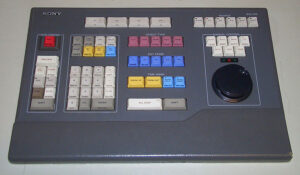
Source: Wikimedia Commons. - Non-linear or digital editing. There have been several generations of these types of editing in line with technological developments, and this represented a breakthrough in the field of video editing with the digital revolution of the 1990s. This system meant a change in editing processes, especially with the introduction of new, higher quality video formats which also made it possible to work in a much more flexible and efficient way – by working non-sequentially with computers and, later, also with other digital devices, such as mobile devices. Among those first non-linear editing programmes, we see Avid Media Composer or Adobe Premiere, which are more oriented to professional work, and which have evolved at the same time as the technology itself.
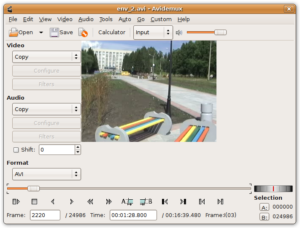
Source: Wikimedia Commons.
Currently, some video editing software is already built into the system, such as Clipchamp (for Windows 1), iMovie (for OSX), and other free cross-platform video editing software can be installed, such as Openshot, Shotcut, Kdenlive, and OBS, among others.
Compact digital cameras (portable and easy to use), mobile integrated cameras, DSLR cameras, MILC (Mirrorless) cameras, GoPro cameras or those that produce 3D images allow image quality that leads towards video software capable of managing increasingly larger files within editing platforms. Innovations such as editing in the cloud with different people watching all the changes in real time, editing apps integrated to mobile devices, artificial intelligence (AI) and automatic learning have revolutionised the market, providing advanced tools and functionalities for professionals and fans of multimedia production. There is no doubt that video technology has been growing exponentially since the early 2000s in terms of affordability, ease of use and portability (Calandra and Rich, 2014).
According to Espinosa and Abbate (2005), editing a video consists of manipulating it to elaborate an organised and coherent discourse, with continuity. This involves selecting the previously recorded images and putting them one after the other, depending on what you want to explain, and elaborating a discourse. It also allows us to incorporate still images, music and sound, add digital effects, graphics and any other resource that allows for a finished audiovisual product.
Editing also makes it possible to correct or improve aspects derived from the recording to achieve better quality in the final audiovisual product. Some examples to this are audio and colour processing, adding filters, effects, transitions, etc.
Even so, it is essential to ensure that the minimum technical requirements are met during the recording of film material to ensure that all elements are captured in the best possible way from the start, thus facilitating the editing process and allowing for optimal results.
That is to say, if, for example, burnt images have been recorded because they have been overexposed to light, or if distorted or saturated audio has been recorded, these defects can be alleviated relatively effectively during editing with the new technologies of the programmes offered by editing platforms. Even so, it is preferable to avoid these problems from the moment of recording.
There are currently numerous technological solutions on the market for non-linear video editing. In this field, we can find a wide range of software, both with commercial and free software licences, as well as those oriented towards professional use, or other solutions designed for domestic or semi-professional use.
In the sections below, this guide gives you some recommendations for video recording. Further on, you will also find a series of technical aspects to take into account during the video editing process, as well as different video editing tools, both for desktop and mobile devices and online tools, and the main functionalities of some of these editors. We conclude the guide with different recommendations for publishing and sharing videos on the web.